
Introduction
Winter storms can leave a mess: snapped branches, fallen limbs across the driveway, and leaves and debris everywhere. The urge is to get straight out there and clear it all up. But storm clean-up is one of the riskiest jobs of the year, so it pays to take it slowly.
Safety first: assess before you cut
Check for hazards
Before you touch anything, walk around and look for:
- Downed or damaged power lines. Stay well away and call your lines company. Never cut near them
- Hanging branches ("widowmakers") that could drop without warning
- Leaning or partly uprooted trees
- Unstable ground, especially on slopes after heavy rain
Know when to call a professional
If a tree is on a building, tangled in power lines, or hung up in another tree, call an arborist. These situations need specialist gear and experience.
Understanding tension
Storm-damaged wood is often under tension. Branches can be bent, twisted or pinned under other branches. When you cut, that energy is released, and the wood can spring out or drop suddenly.
- Look at how the branch is loaded before cutting
- Make small relief cuts on the compression side first
- Cut in sections, working from the tip back
- Stand to the side, never in line with where the branch will move
If you are not sure how a piece will behave, leave it to someone who is.
Picking the right tools
Battery chainsaws for most clean-up
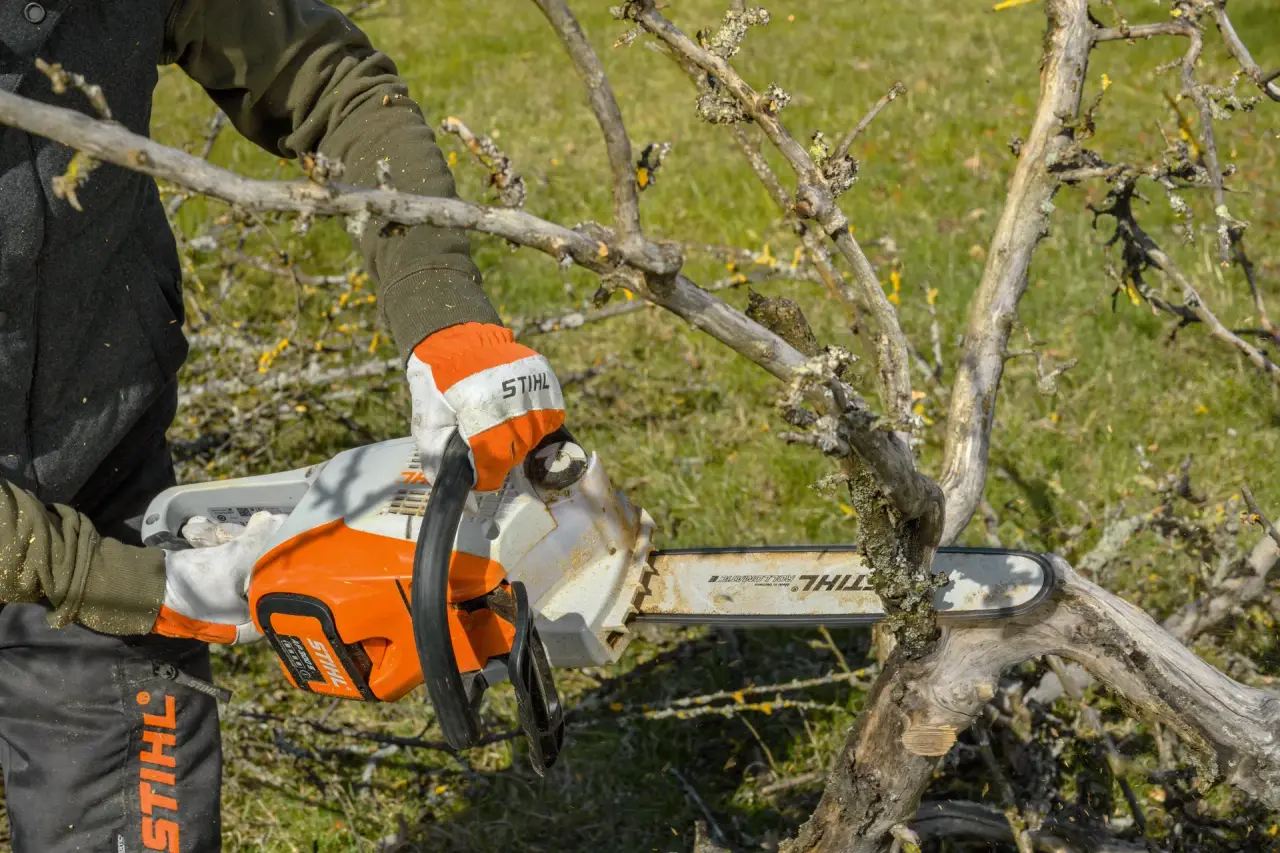
For the branches and small trees that come down in most storms, a battery chainsaw is ideal. It is light and quiet, starts first time, and there is no fuel to mix. It is easy to pick up and put down between pieces, which is exactly how clean-up work goes.
Petrol chainsaws for bigger wood
If larger trees have come down, a petrol chainsaw with the right bar length will handle the bigger cuts.
Pole pruners for broken limbs overhead
Hanging broken branches can be removed from the ground with a pole pruner, so there is no need to climb a ladder with a chainsaw.
Blowers for the finish
Once the heavy stuff is gone, a blower clears leaves, twigs and grit from paths, driveways and decks in minutes.
Gear up
- Chainsaw protective trousers or chaps
- Sturdy boots with good grip. Everything is slippery after a storm
- Gloves and eye protection
- Helmet if you are working under trees
Get your gear ready before the next one
Storms tend to arrive without much warning. A chainsaw that sat all winter with old fuel or a dull chain is no help when a tree comes down.
- Keep your chain sharp and bar oil topped up
- Keep batteries charged or fresh fuel on hand
- Get your chainsaw serviced before the stormy season
The best storm clean-up is a slow, safe one, done with a sharp, serviced saw.
If your chainsaw needs a service or a sharpen before the next storm, drop it into STIHL SHOP Rotorua. We will have it ready when you need it.