
Introduction
Around Rotorua, with forestry on our doorstep and plenty of lifestyle blocks, felling a tree is a job a lot of people take on themselves. Done well, it is controlled and predictable. Done badly, it is one of the most dangerous jobs you can do with a chainsaw.
This is not a substitute for proper training, but it covers what you need to think about before the saw starts.
First: should you be doing this at all?
Some trees are a job for a qualified arborist, full stop. Call a professional if the tree:
- Is near power lines, buildings, fences, roads or anything you cannot afford to hit
- Is leaning heavily, rotten, split, hollow or has dead limbs overhead
- Is bigger than your chainsaw's bar can comfortably handle
- Is tangled with other trees, or you are not sure which way it will fall
There is no shame in calling in an expert. It is the smartest call you can make.
Gear up properly
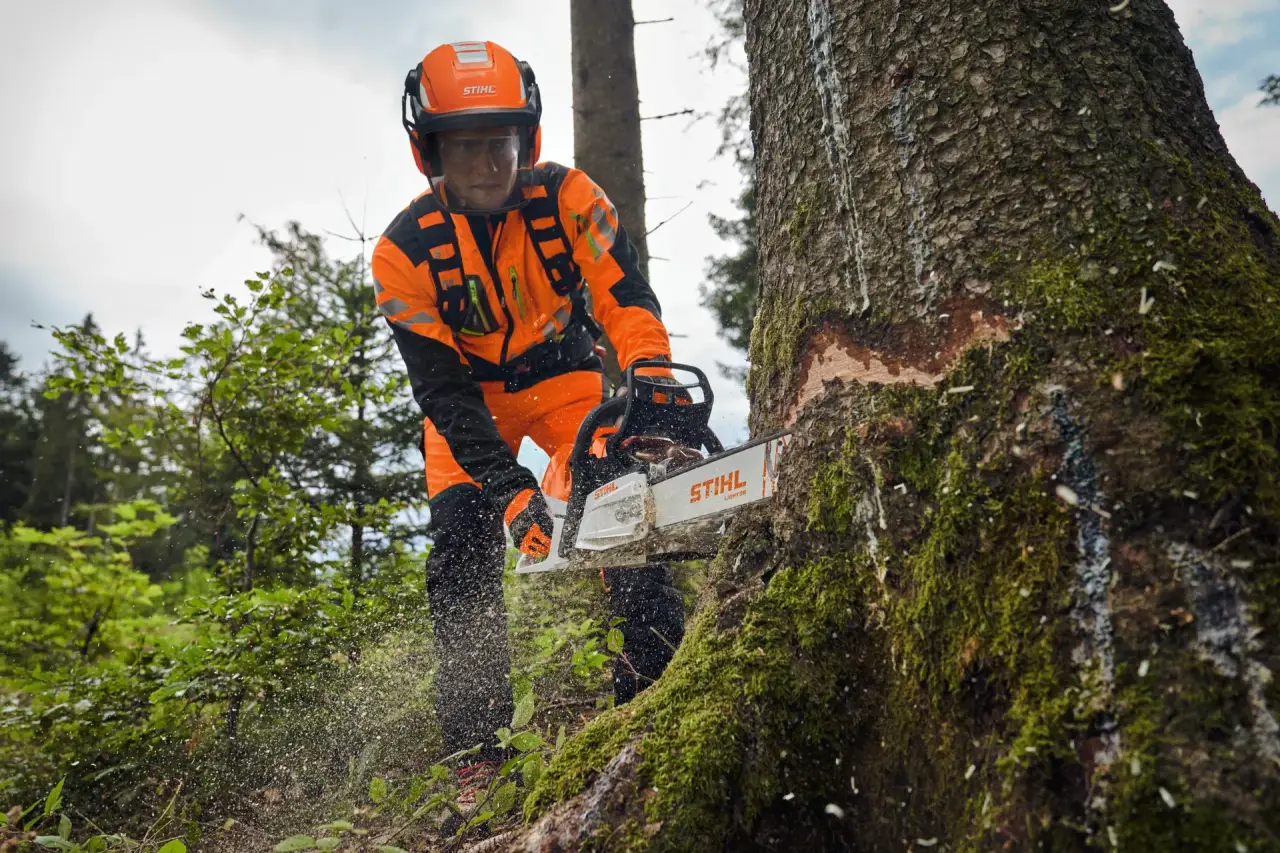
Felling requires full protective equipment, every time:
- Helmet with face screen and hearing protection, because falling branches are a real hazard
- Chainsaw protective trousers or chaps, designed to stop a moving chain
- Chainsaw boots with steel toe caps and good grip
- Gloves that give you grip and protection
- High-visibility clothing if anyone else is working nearby
Your chainsaw should be serviced, with a sharp chain, correct tension and a chain brake that works. A dull or poorly maintained saw is far more likely to kick back.
Plan the fall
Read the tree
Look at the lean, the weight of the crown, the wind, and any dead branches. Trees tend to fall the way they lean and the way their weight sits, and the wind can change that.
Clear the work area
Remove anything you could trip over around the base, and keep everyone at least two tree lengths away from the fall zone.
Plan your escape route
Before you cut, clear two escape routes going back and away at roughly 45 degrees from the direction of fall. Never stand directly behind the tree as it goes over.
The basics of a controlled fall
A controlled fall relies on three cuts working together:
1. The notch (face cut)
Cut on the side facing the direction you want the tree to fall. The notch guides the tree and controls the direction of the fall.
2. The back cut
Made from the opposite side, slightly above the base of the notch. It is what releases the tree.
3. The hinge
The strip of uncut wood left between the notch and the back cut. Never cut through the hinge. It steers the tree down in a controlled way. Cutting through it means you lose control of where the tree goes.
Felling wedges can help keep the back cut open and encourage the tree in the right direction. The details of each cut matter, which is why hands-on training is worth every cent.
After it is down
- Wait for the tree to settle, and watch for hung-up branches or trees caught in others
- Watch for branches under tension, which can spring out when cut
- Work from the uphill side when cutting up on a slope
Get trained
If you use a chainsaw regularly, a practical chainsaw safety course is the best investment you can make. You will learn to read trees, make each cut properly, and handle the situations that catch people out.
The most important part of felling a tree happens before you pull the starter cord.
Before your next job, bring your saw into STIHL SHOP Rotorua for a check-over. We will make sure the chain, brake and bar are ready, and help you choose the right protective gear.